
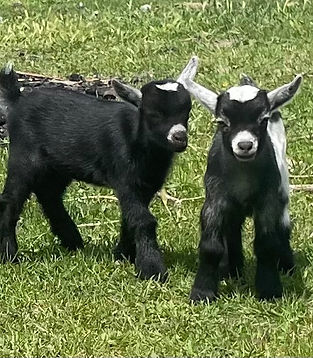
Patient Hope Farm
I grew up with a variety of goats on my family's farm, but when I had a family and farm of my own, I fell in love with the Nigerian Dwarf breed. There's so much to love about them! They have hilarious personalities, they're easy to handle (you just pick 'em up if they don't walk!) and their milk is deeeelicious.
I dabbled in a few things. I attended a couple of shows and events, tried milk testing, etc. I admit I found it a little frustrating because shows and performance programs required a lot more of myself than I was willing to give! I just enjoy goats, and I love learning about them, and definitely enjoy the process of improving my little herd, but I don't aspire to be a top ten breeder. I am very proud of my little herd, however, and continue to make great improvements. Patient Hope Farm goats are nice goats at affordable prices.
Last year, we switched to bottle-raising baby goats, because I decided that for me personally, I was tired of chasing goats. Yes, often if you handle a dam-raised baby a lot, it will become tame. But not always. And it always seems to be your keeper that remains wildly independent as she grows! I really liked how this went, and I also appreciated that kidding season was not as hard on my does. They regained their condition quickly, and milking went well. No teat injuries or mastitis. We will definitely do this again.
The Future of PHF
A lot of changes are coming to my farm this year! In addition to the fact that all babies will be raised on the bottle, I will be adding a new(ish) breed to my herd. I'm on a reservation list for hopefully 2 Alpine does. I have always loved alpines, and I have a few home-bred minis here, and I decided I wanted to continue doing this and developing my own line of Alpines and minis. I have reduced my Nigerian herd a little bit, but I don't have plans to stop breeding them at all! I love my little buddies.
Additionally, I have switched registries. After several years of frustrations with ADGA, I decided to change over to AGS. American Goat Society offers everything I need for my herd, and so far, they've been easy to deal with. I may even be able to participate in classification (AGS' version of Linear Appraisal) and eventually milk test again!
And finally, because my main goal is for my baby goats to find great homes where they will be loved and cared-for, I am introducing a Reservation Application. If you fill one of these out, showing that you are a serious buyer and are prepared for goats, you will be added to a mailing list to be notified of goats available. If you have an approved application, you will be eligible for major discounts on prices.
.jpg)
There's a lot of info below! I love to write. :) TL;DR: Advice for different purposes of goats.
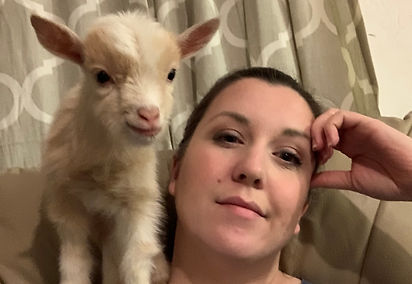
3. If you just want pets, nothing to breed, then I recommend wethers. They generally have nice temperaments, they are easy keepers, and you never have to worry about the neighbor's buck getting in and getting someone pregnant. Does can be pets too, of course, but they are more hormonal and they are in their best health when they are doing what they're designed to do: have babies and produce milk. Another good pet option is to look for a retired doe. This is one who has maybe stopped being able to get pregnant, or who maybe survived a scary birth and the breeder doesn't want to risk breeding her again. You can often be given one of these. When well-cared for, goats can live 12-15 years.
4. Goats do not ONLY eat brush. And sometimes they are picky about what brush they will eat! Mine do love green puncture vines and brambles, and they will eat the FLOWERS off the chickory that grows in my pasture. They won't touch foxtail or milkweed thistles. They can be on pasture when it's green, but when you don't have green grass, you will need to feed a quality hay. For pets, a grass / alfalfa mix should work fine. Maybe a little good quality grain in the winter.
Here at Patient Hope Farm, I offer wethers as pets most of the time, but you can occasionally get a doe (especially if a bottle baby) or a retired breeding doe. I require that you purchase at least two if you do not already have goats. The price range on pet goats ranges from free to $150.
Pets / Enjoyment
Goats do make great pets! They can be trained very much like a dog. They enjoy climbing and playing and following their people around. Some people enjoy hiking and camping with their goats. There are a few things to keep in mind, though.
1. Goats are herd animals, and they need herdmates of the same species. If you want to enjoy your goats, make sure you have at least two that can live together. Two does, two wethers, or one of each.
2. Unaltered bucks do NOT make good pets. They are smelly and can be aggressive, especially if they are comfortable with humans.
5. Even for pets, you will need to do some maintenance. Hoof trims and regular health checks (by you) are necessary. And for me, the most important thing is keeping a quality loose mineral available all the time, or mixed in their daily feed. This will help prevent countless health issues. If goats are on pasture, they can be more prone to parasites, so you want to watch for that and stay on top of it. Lice can also be a problem in the late winter / early spring. I have some articles on what I do for maintenance that you can refer to. It's not exhaustive, and I highly recommend researching for a good vet that has experience with goats' particular needs. I'm very blessed with mine!

Breeding and Milking
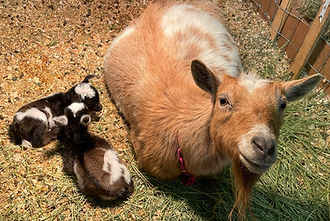
Kidding season is my favorite time of year! Well, usually. My favorite time for kidding is very early spring, when it's still nice and cool and there are no flies. Anyway, it's FUN. Baby goats are pretty much the cutest things ever made, and I love having fresh goat milk in my fridge.
Again, small time breeders are often looked down upon, but I say that as long as you have a plan for what you're going to do with all those baby goats, you go right ahead! I'll talk about both aspects separately.
Breeding Herd:
1. Invest in quality, registered animals. They don't have to cost thousands of dollars, but cheap goats are cheap for a reason. Look for farms that take the time to get good photos, who have pictures of the sire and dam and dam's udder if available. Look for breeders that have knowledge about their animals and the breed.
2. Bucks and does must be kept separate. Nigerians can and will breed year-round, and can get pregnant again as soon as two weeks after giving birth. If you value the longevity of your goats, you will not breed them more than once a year, and you will time it in a way that you at least know the window for a due date.
3. Bucks shouldn't live alone, and does shouldn't live alone. One buck and one doe sharing a fenceline is not enough, and one will just get in with the other. A starter herd (which I will occasionally offer as a package) would consist of a buck, a wether friend, and at least two does.
4. Baby bucks can breed as early as 8 weeks old. Baby does can get pregnant fairly young as well. Don't kid yourself, thinking that the baby buck can live with the does because he's still a baby. He will assure you that he is a man. :P
5. Does should not be bred until they are at least 40 pounds. I have bred does at 7-8 months, and it's usually fine, but I've found it's MUCH better to wait until the following year, so that they will kid when they're 2. I've found they have easier births this way, and they also stay in better condition for milking / feeding babies if they're not still growing like babies themselves.

What to do with baby goats:
1. Keep them with Mom or on the bottle for 8-12 weeks.
2. Give necessary supplements. I will break this down in a blog post.
3. Disbud (remove horn buds). This greatly increases your pool of buyers. There are many people who will not buy.
4. If the sire and dam are registered, register the babies. Again, this increases your pool of buyers.
5. Follow a coccidia prevention program. There are many different options. I have had best results with dosing sulfamed orally every 3 weeks.
6. Decide what you'll do if you can't sell all of the baby goats. Can you afford to keep them until they sell? Can you grow them out to butcher? Or do you know someone else who would want them for meat? Some people take to the sale barn, and I suppose if you have a good one near you, that's an option. The ones near us are disease-infested, loud, traumatizing places, and I would rather eat my goats myself than send them there.
Milking: I'm not going to lie. Milking is a CHORE. There is a learning curve to the actual process of hand-milking. It's time-consuming, and it adds a layer of complications if you're planning to go out of town. But...the milk is SO good.
1. It shouldn't taste "goaty". Nigerian dwarf milk is sweet and has a high fat content. It's delightful.
2. There are many benefits to drinking raw milk. Read up on it at rawmilk.org.
3. You'll want to make sure you have a comfortable setup for milking. A milking stanchion is indispensable for your comfort and the goat's comfort. Hand milking is fun, but time consuming. If you plan to milk more than a couple of goats, you might want to get a machine. I use a Simple Pulse. There are a few "cheap" machines on the market, but they are not worth buying. They don't work well and they can damage your goat's teats.
4. You can milk and dam-raise. You leave the kids with mom during the day, then separate at night, milk in the morning. This worked well for me when I was dam-raising. Now I bottle raise. I usually milk twice a day at first, then switch to once a day after they're milking steadily.
Nutrition has a lot to do with the quality and amount of milk a goat produces, but the udder structure is equally important. I will only approve certain bucks to remain intact and be a herd sire. I will recommend goats for milking if both sire and dam have quality udder structure in their lines. Goats sold for breeding will be registered, and priced at $400 each.
Meat
While Nigerian Dwarfs are primarily a dairy animal, they do have meat on them and can be used that way. I have not yet done this, but I plan to someday.
Here's the thing: every year, goats are sold as pets or "weed eaters" and go to places where they are not well-cared for. Or they are penned all together resulting in multiple breedings every year, which is hard on the does, or even lethal. I am fine selling goats to be meat. I do still want them to be cared-for.
Some people think that if you're going to eventually butcher an animal, it doesn't matter how they are treated. They can be given a sub-par diet, kept in a pen by themselves, and never interacted with. Maybe this helps the humans not be so emotional, but it's nonsensical to the animal. Happy goats are healthy goats, and healthy goats will be delicious. You should work to give them a good quality of life, however long or short that is.
4-H / Showing
Nigerian Dwarfs are ideal 4-H projects for kids, because they are kid-sized! Kids can handle them even more easily than adults can (we have to bend down) and can keep control of them. There's less animal to groom, and admit it: kids leading goats around is just cute.
Nigerians are very popular in the show ring, as they are a popular breed, so if you like competition, you can be sure to find it!
While I do not show at this time (I hope to someday), I do my best to educate myself on qualities to look for, and I pay attention to bloodlines. I will offer quality animals as "show" animals if they have a good pedigree, a good appearance as a kid, and have a good personality.
